Photos, live video, GPS position, radio and life-saving alerts, from a simple phone, with nothing to install. The crisis room in the pocket of every responder.
In the field, every second counts. QuickShare gives the command post the eyes, the voice and the position of every responder, instantly, from any phone. No app to download, no hardware to deploy: one link, and the team is connected.
Every feature is designed to be used one-handed, under pressure, by operators who are not IT specialists.
The responder streams their feed to the command post instantly. The video server handles several responders at once, with three adjustable qualities to suit the network (ECO, SD, HD).
A drone's feed from the field comes back to the crisis room, even hundreds of kilometres away: the pilot streams, the operator sees the aerial view live. Everything goes through your server in France, no foreign cloud.
Every responder is placed on the map, their route traced live. Full-screen view for the crisis room wall.
Push-to-talk through the browser: the whole team on the same channel. Press to speak, release to listen. The dispatcher can take the air for everyone.
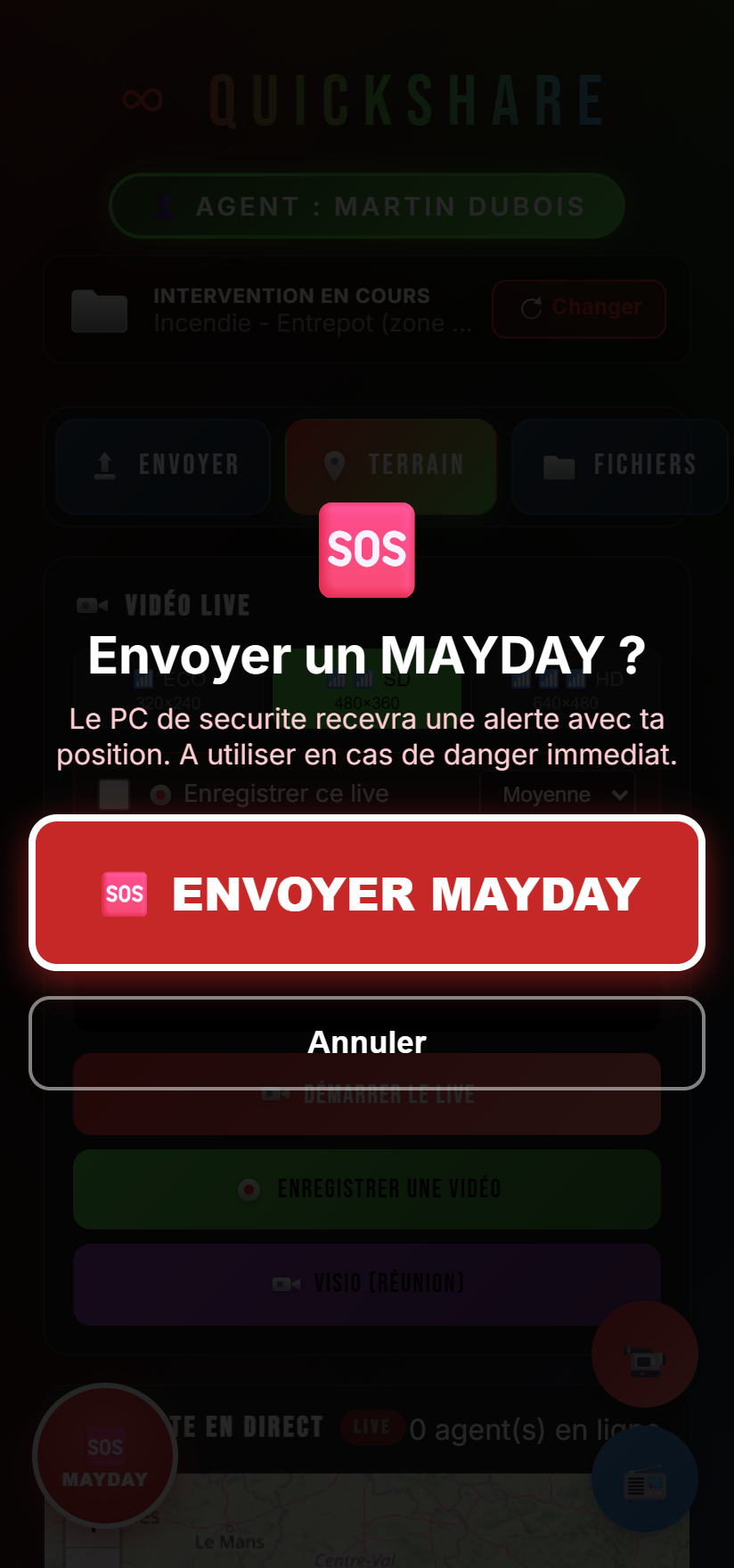
Permanent red button. Automatic "responder down" detection: a fall or prolonged stillness triggers an alert with the position, even when the network is lost.
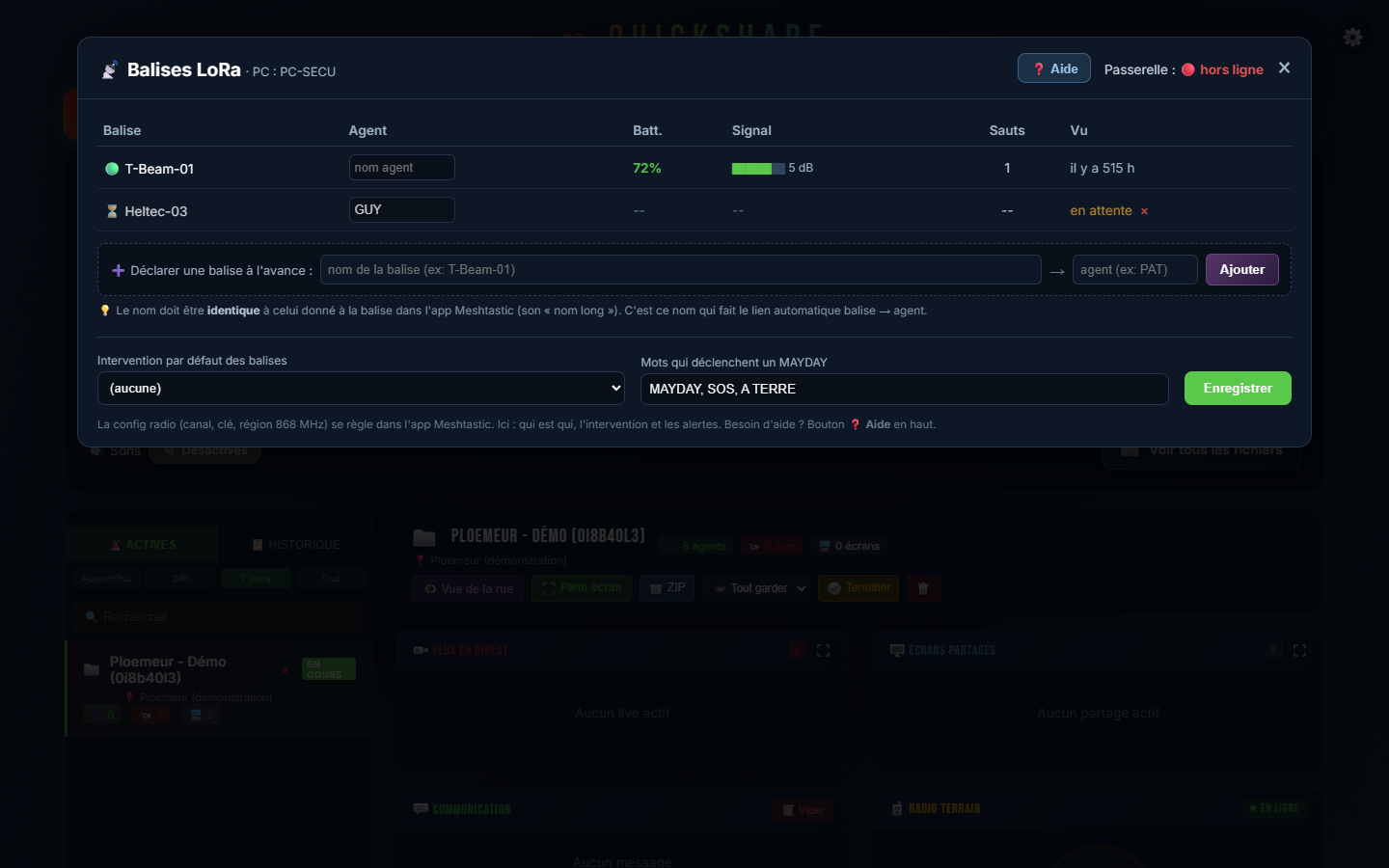
Underground or in dead zones, radio beacons transmit responders' positions over the air, without any mobile network.
The command post draws on the responder's video: arrow, circle, text. The responder sees the annotation appear in real time. A red arrow is worth more than a long explanation.
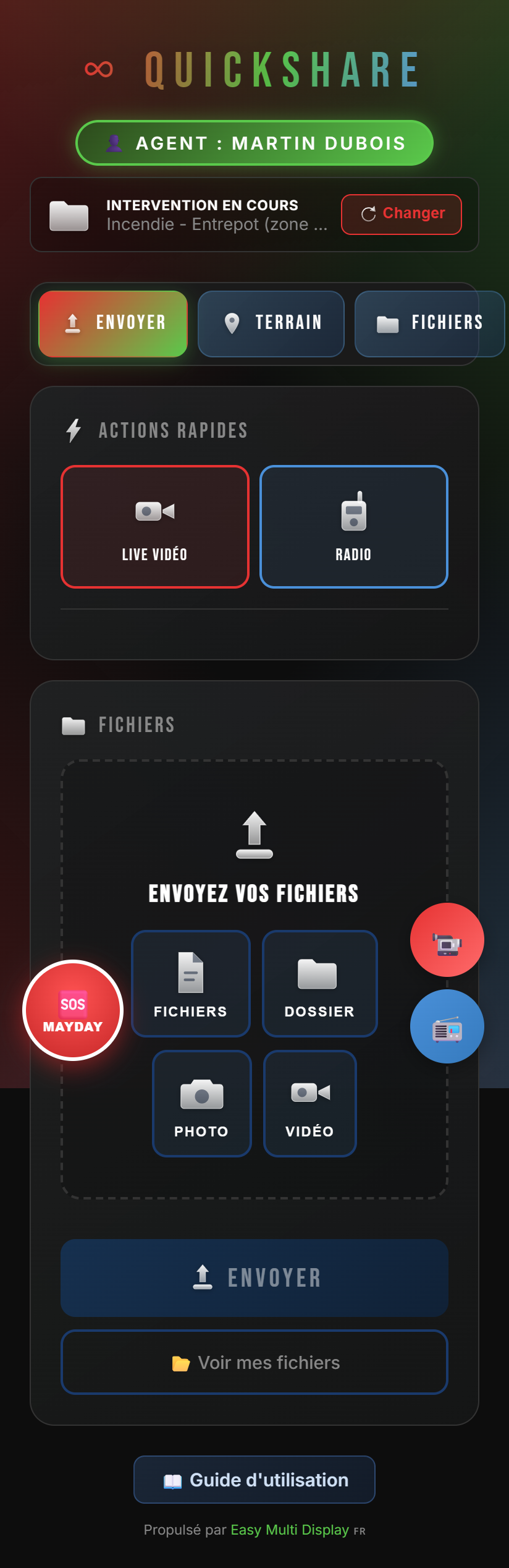
Take a photo, record video, or send documents and folders (images, videos, PDF, Word, Excel). Each item is geolocated on the map.
From a computer, show your screen to the command post: maps, plans, business software.
Multi-party video meeting in a room dedicated to the incident, like a video conference: the command post and responders see and talk to each other live. Join in one click, no app.
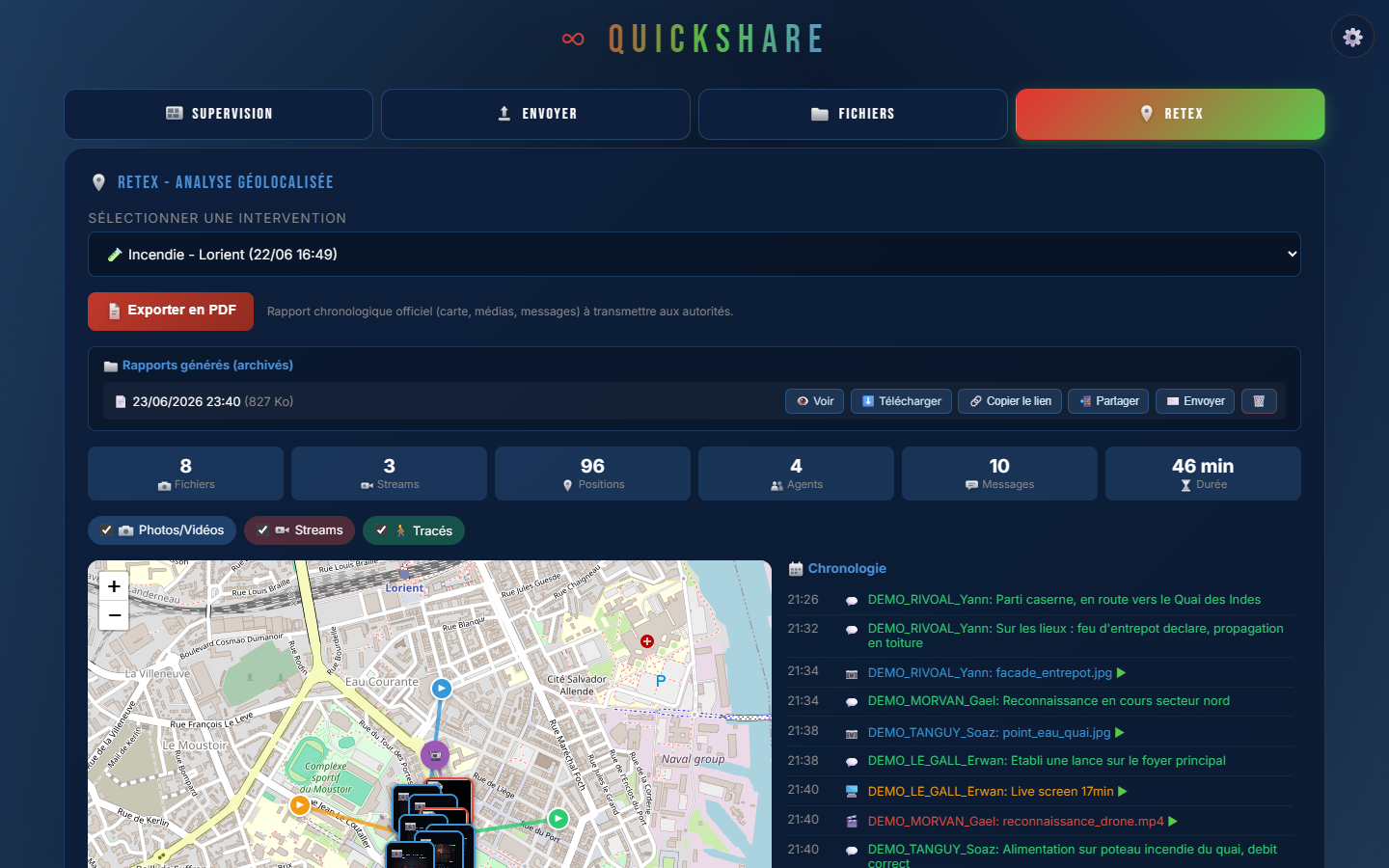
A chronological PDF report of the operation (photos, videos, messages, voice, map), to send to the authorities. Archived, shareable by secure link or by email.
Live, screen or invitation link: share it in one tap via your phone's menu (WhatsApp, SMS, email, Signal...). The recipient opens it, with nothing to install.
QuickShare exposes a standard MCP connector: an AI assistant - local (Ollama, LM Studio) or cloud as an option (Mistral, Claude, DeepSeek...) - drives the application in natural language: create an operation, generate the after-action report, post a message, send a link. The AI can be local and sovereign, hosted in France.
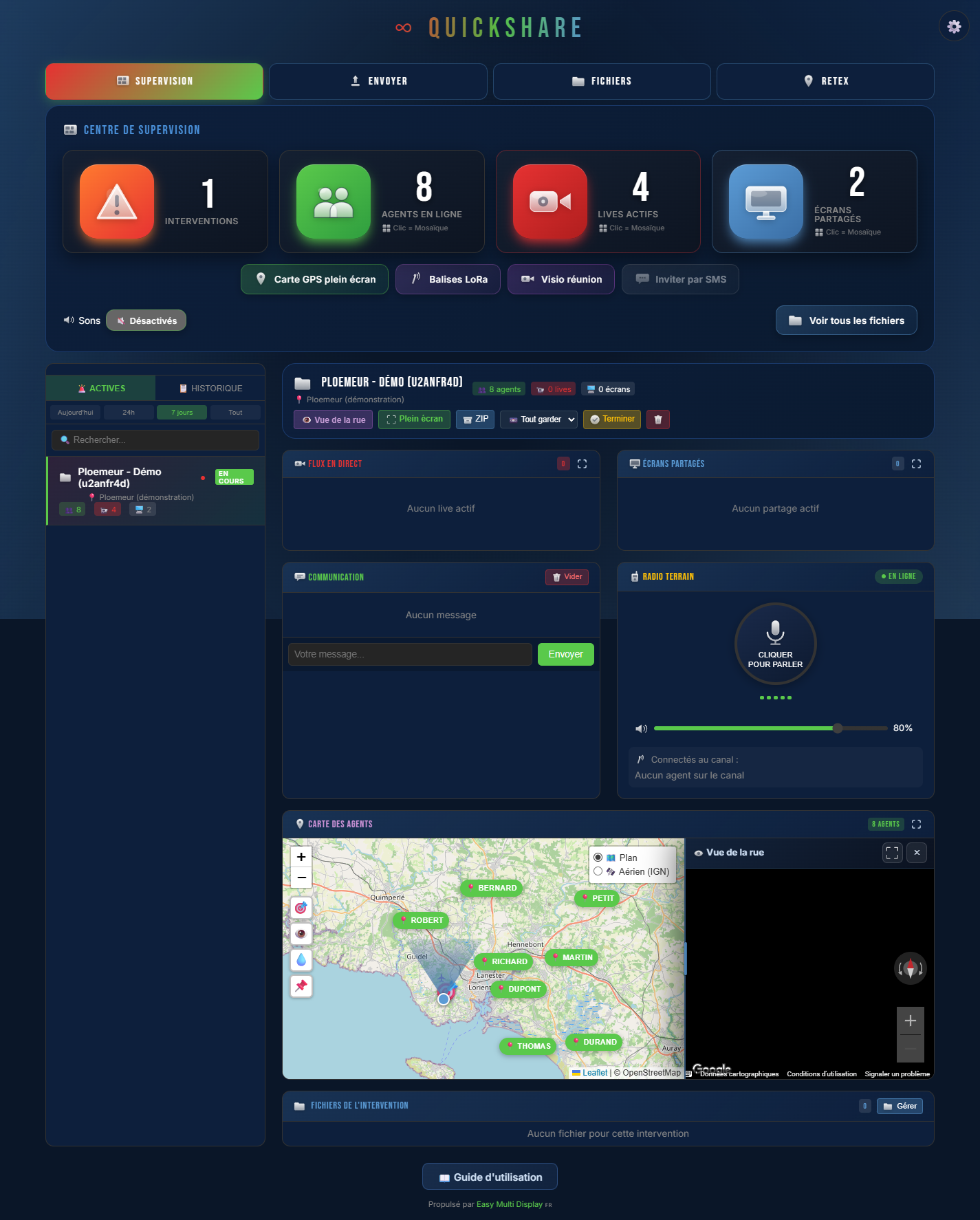
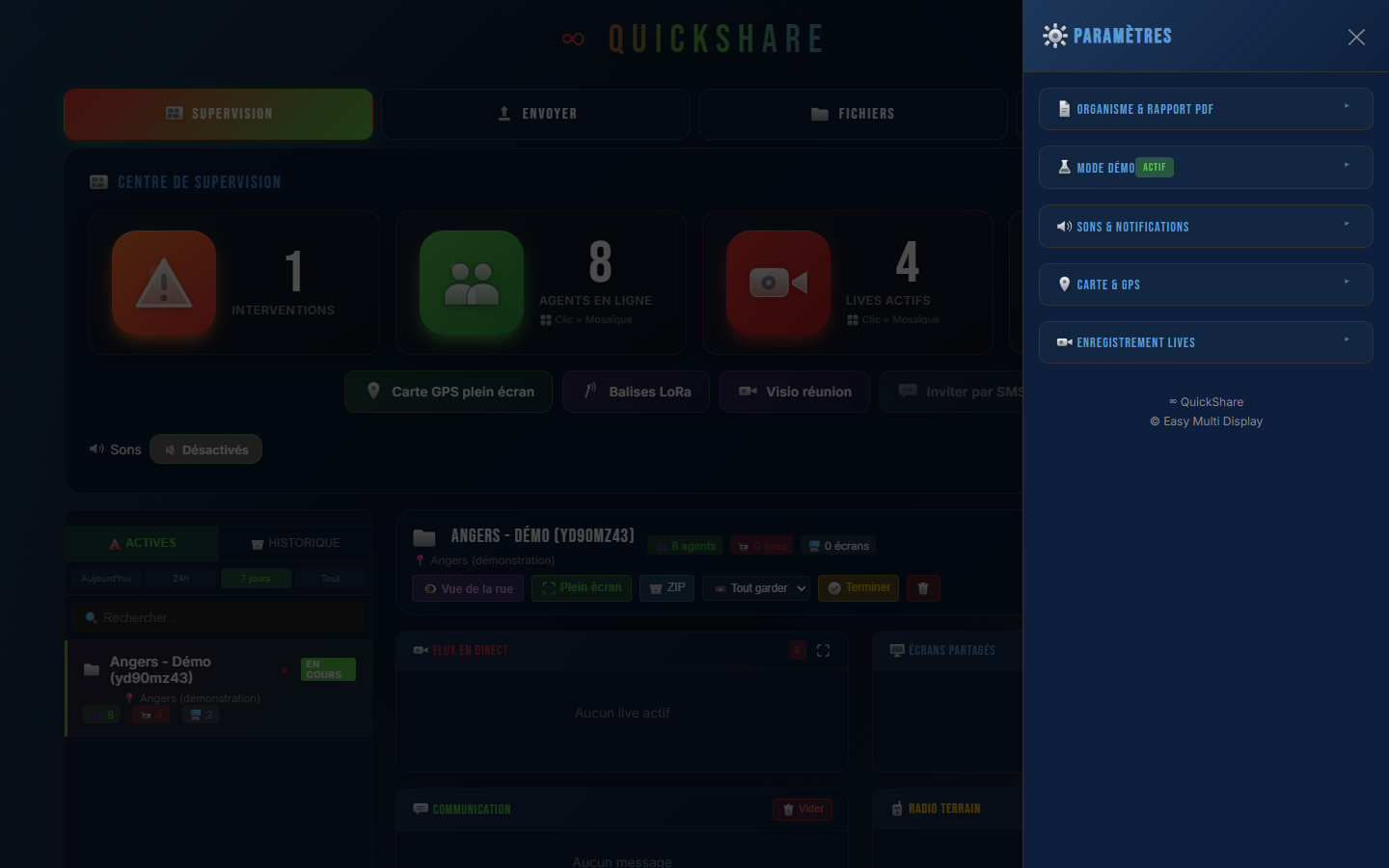
Real-time counters and mosaics of responders, live feeds and screens, openable full-screen on a video wall.
One-tap messages (Received, Danger, SOS, Withdraw, Done). Danger and SOS go out as a red alert on the command post side.
Replay a finished operation on the map: responders' routes and positioned media. Chronological PDF export (photos, videos, messages, voice) ready to send to the authorities.
When a live feed starts, a link is generated: a reinforcement or a medical dispatcher opens the video in any browser, with no account.
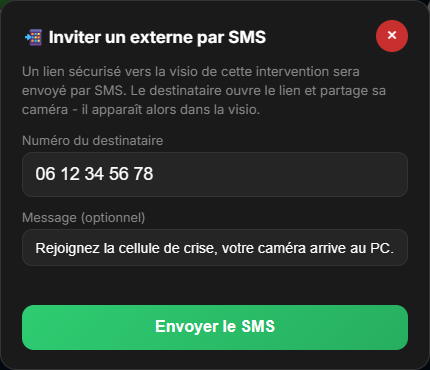
A witness, a victim, backup? Send an SMS - to one or several people from your address book. Each one opens the link and shares live what you chose: their camera, their screen, or a video call. No app, no account.
Your recurring contacts (emergency medical, police, on-call officials, technical services, partners) one click away. Import your existing directory, and alert a whole group by SMS or email in a single move.
Scout the location before you arrive: Google Street View or Panoramax (sovereign), with address search to explore the access routes, the rear of the building and the surrounding streets.
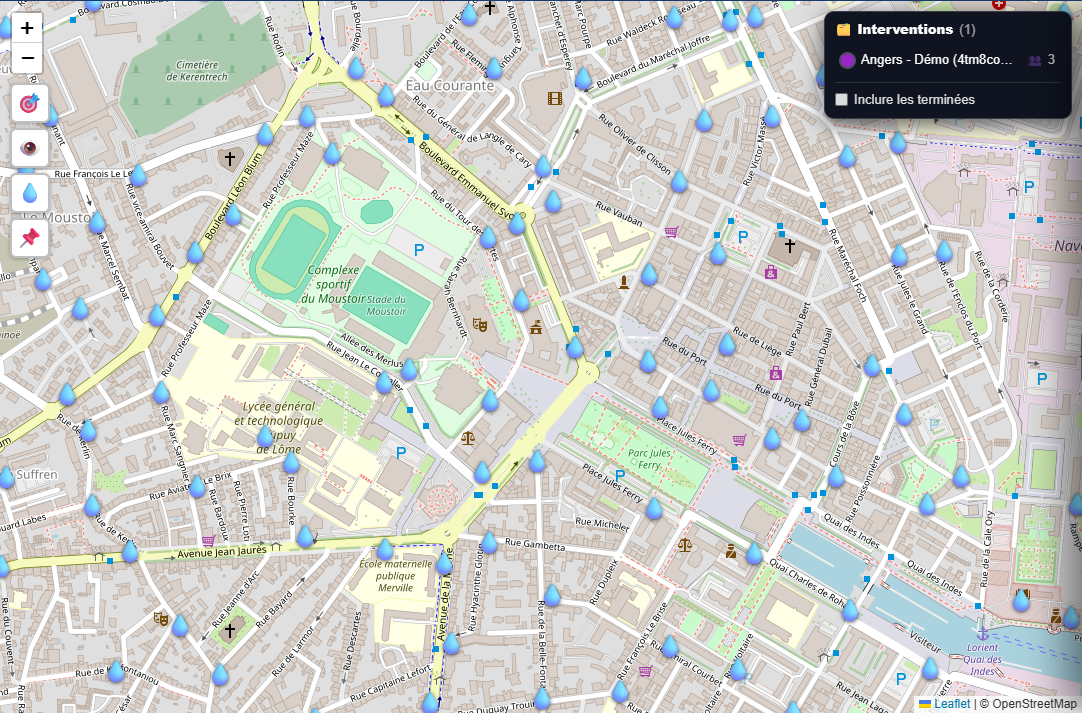
Show the hydrants and water points (DECI) around the operation, on the map. Know where the water is, before you even arrive on scene.
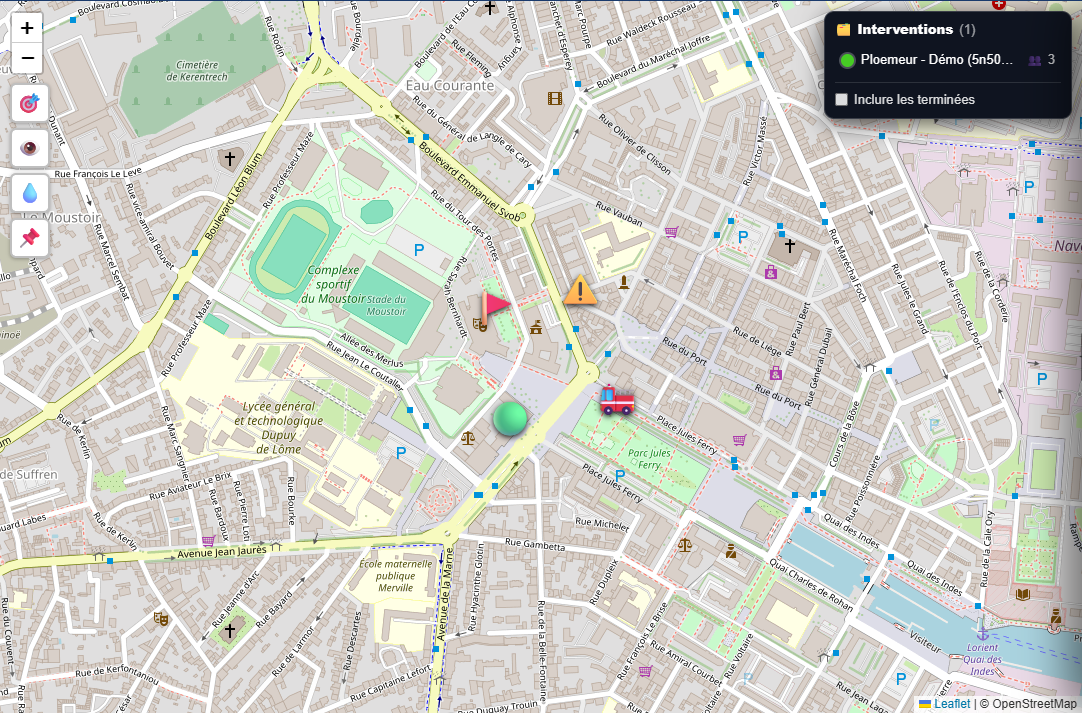
The command post drops points on the map - vehicle access, danger zone, command post, assembly point - seen by every responder in real time.
The room leader clicks on the map: the operation is created with the address and GPS position filled in automatically. Ready in two clicks, under pressure.
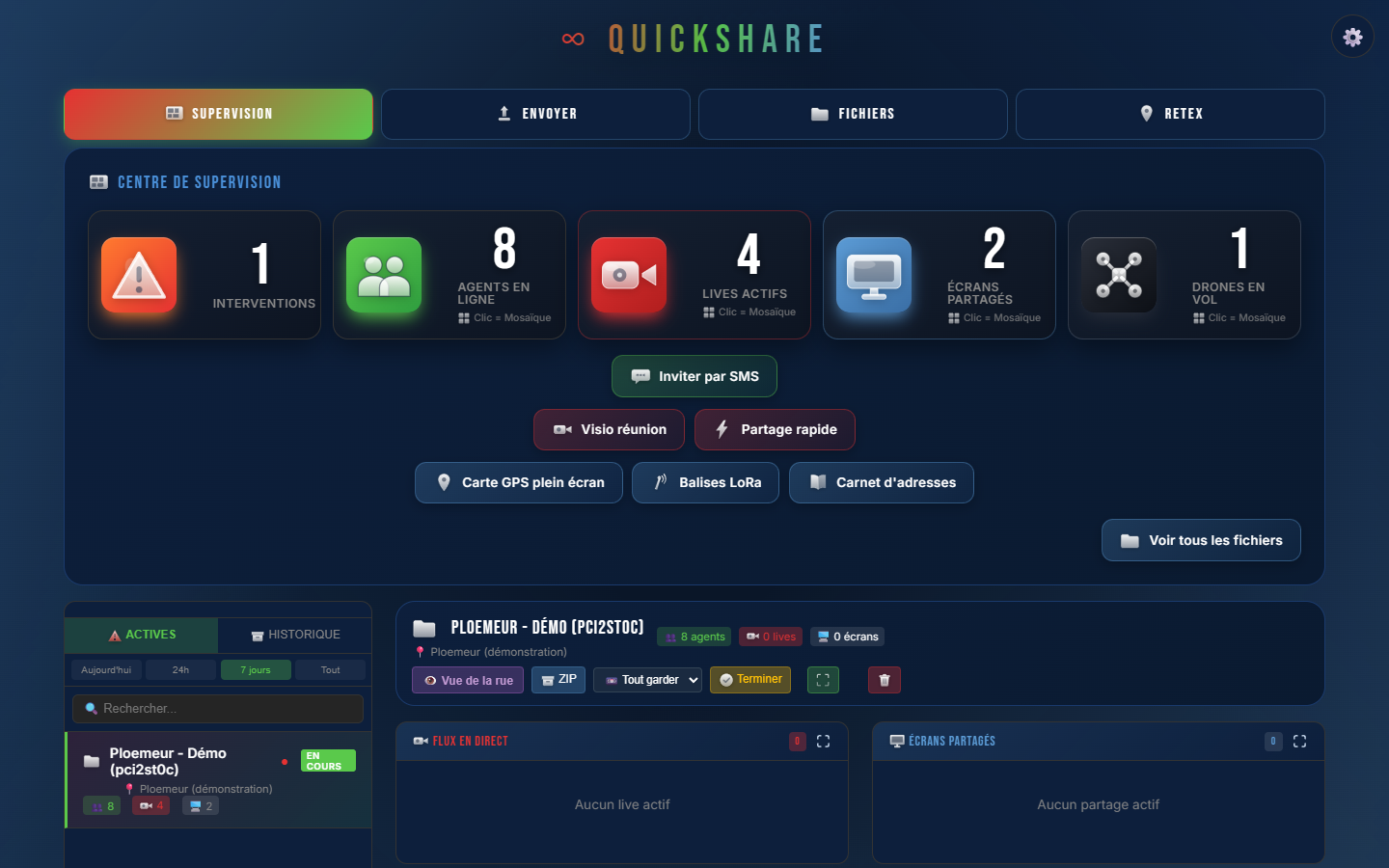
Open a private demonstration room in one click. Invite a colleague from their phone (just a link): their camera appears in your command post, live. Radio, annotations, map - try everything, for real. The intervention is placed at your location: you and your guests appear on the same map.
An isolated, short-lived room with no real data - ideal for a presentation with several people.


Basement, car park, tunnel, isolated area: where 4G stops, QuickShare keeps going. LoRa radio beacons transmit responders' positions over the air, without any mobile network.
A witness or a victim calls the emergency centre. The operator sends them a simple link: one tap, nothing to install, and their phone camera streams live to the command post. You see the scene before your teams even arrive.
In line with the video-rescue solutions already adopted by emergency services, but sovereign and hosted in France.

A drone is flying over the incident? Its image comes back live to your command post, wherever it flies - even if the crisis room is hundreds of kilometres from the field. Compatible with any drone or encoder on the market that streams live (DJI, Autel, Skydio, OBS...), the pilot streams from their drone's app and the operator sees the aerial view with nothing to install. The feed goes through your server, hosted in France: no foreign cloud.
The drone's aerial view appears in the crisis room mosaic, alongside the responders' cameras and the shared screens.
The drone and the command room can be on different networks, around a hundred kilometres apart: the server bridges the two.
The feed goes through your infrastructure hosted in France, never through a foreign cloud. In EMD's "Local First" philosophy.
The pilot receives a link to paste into the drone's app; the operator opens a screen that's already set up. Nothing to configure.
Protecting the responder is built into the heart of the tool. With one press, or even on its own, the device raises the alert and transmits the last known position.

QuickShare presents itself as a set of tools an AI assistant can drive, through the MCP (Model Context Protocol) standard. The room leader types an instruction in natural language - the AI handles the rest.
No foreign cloud, data under control, in EMD's "Local First" philosophy.
Turnkey hosting by EMD, or installation on your own server for full sovereignty. We support you in both cases.
On 4G as well as in dead zones thanks to the radio beacons, and the video adapts to weak networks with ECO mode.
Everything runs through the phone's browser. A readable screen, designed for operators aged 50 and over, under pressure.
MAYDAY and "responder down" detection with immediate position reporting.
Part of the EMD suite already deployed with fire services (SDIS), SAMU and prefectures (NexSIS, SYSTEL environment).
The crew leader sends photos of the facade, starts the camera to show the spread, the command post draws an arrow to point out an access route and tracks each team. Network lost inside the building? The beacons keep the position.
The team sends photos and a live feed of the vehicle, the command post shares a map, geolocates the operation and coordinates reinforcements by radio. A live link can be sent to the medical dispatcher, with no account.
Responders continuously report photos and positions of the affected areas. The real-time map and route tracing give an overall picture, and the after-action debrief replays the operation for the review.
The video wall shows the mosaic of live feeds and the responder map across several operations. The dispatcher communicates by radio and archives each operation as a ZIP for traceability.
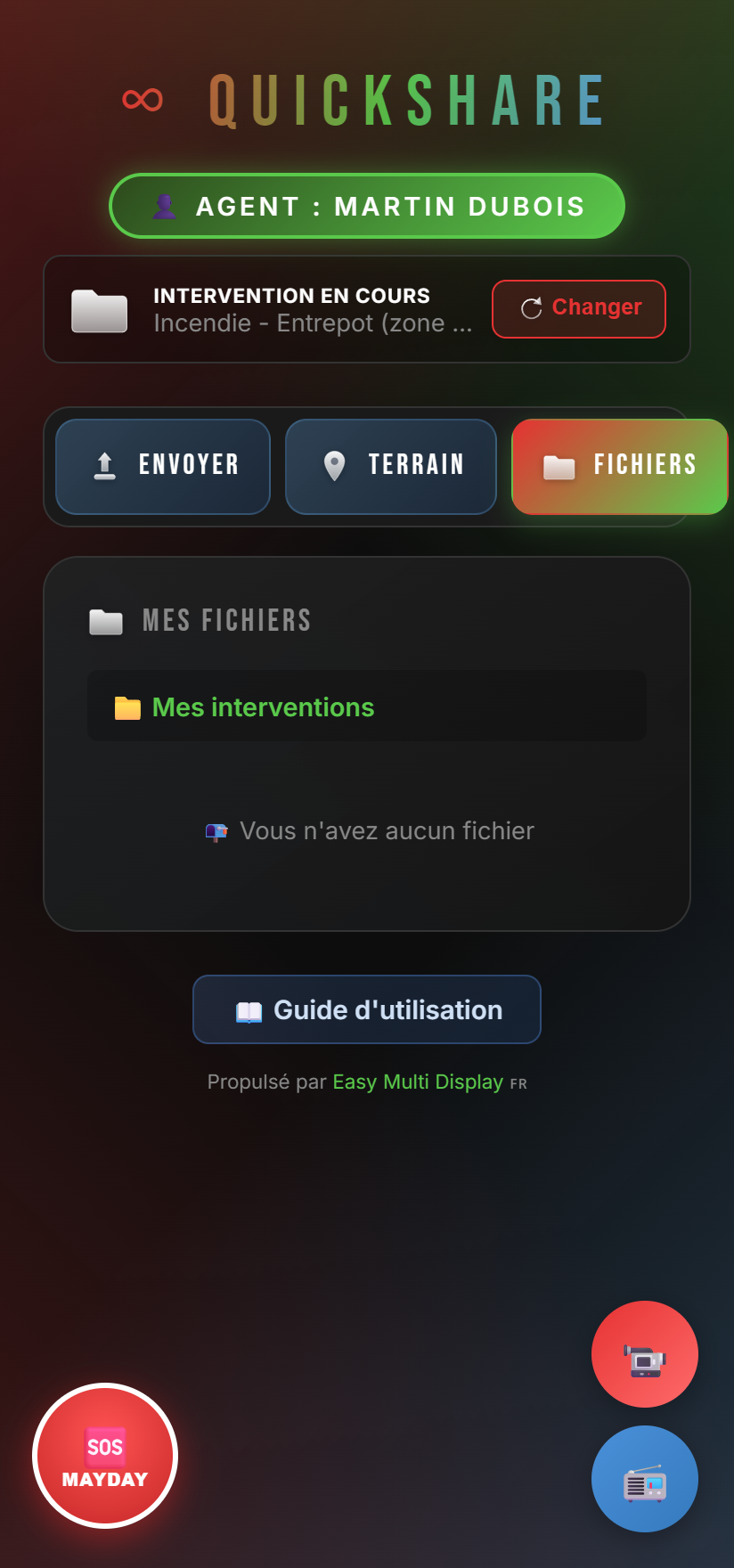
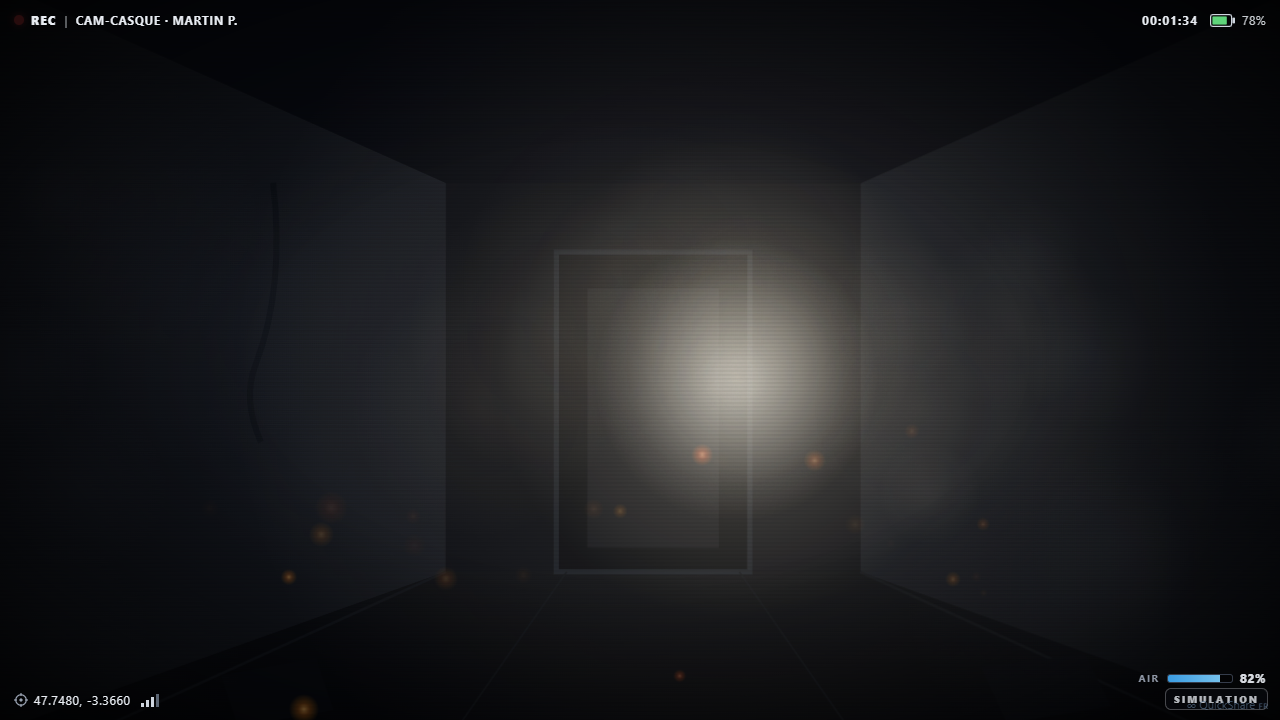
Screenshots of the software, in demonstration mode. Click to enlarge.


Crew leaders, field teams, CODIS and the operations room.
Field coordination and medical dispatch.
Crisis units and departmental operations centres.
Security posts, industrial sites, major events.
Hosted by us, or installed entirely on a server within your own walls: you choose your level of sovereignty.
What you provide: a server (physical or virtual machine), and - to receive a caller or a responder from outside - a secure gateway to that server (reverse proxy / DMZ controlled by your IT department, like for your portal or webmail), with a domain name and its certificate.
Only exception: sending SMS goes through a carrier gateway - yours (your existing alerting tool) or ours. The link can also be shared without SMS (QR code, read out to the caller). Everything else stays within your walls.
You provide the server, EMD takes care of the rest. From the first video call to going live, you are supported end to end.
Together with your IT department we define your needs, your network constraints and the server specifications. Thanks to reuse, a machine a few years old is enough.
EMD installs and configures the whole solution on your server - application, video, map, RETEX history - remotely or on site, under your IT department's control.
We validate together under real conditions: responders' cameras, caller, drone, all coming back onto your crisis wall.
Hands-on for operators with no jargon, going live, then updates and support provided by EMD.
25 SDIS, SAMU 18 and COD 30 use our display and crisis room solutions. QuickShare is the latest addition to the EMD suite, designed to extend that trust all the way to the field.
QuickShare is the "field" building block of a Made in France software suite for managing crisis rooms and video walls, already deployed with the French emergency services.
Request a demonstration: we show you, in real conditions, how to link your field teams to your command post in just a few minutes.
or directly: contact@easymultidisplay.com